On 4 September 2026, the SCAR Bioeconomy Working Group (SCAR BSWG) held an online meeting attended by 27 representatives of Member States and the European Commission.
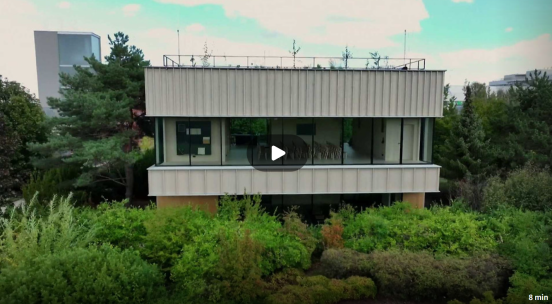
The Faculty of Forestry and Wood Sciences of the Czech University of Life Sciences Prague (FLD CZU) has opened Lesovna – a unique wooden building combining teaching, research and cooperation with industry. The official opening on 3 September 2026 was attended by Prime Minister Andrej Babiš, Minister of Agriculture Martin Šebestyán and Minister of Education Robert Plaga. With a floor area of 581 m2, the building was constructed using 405 m3 of Czech timber and is equipped with an extensive sensor system that turns it into a living laboratory for long-term monitoring of wooden structures. Lesovna demonstrates that wood has a firm place not only in Czech forests but also in modern architecture and sustainable construction.
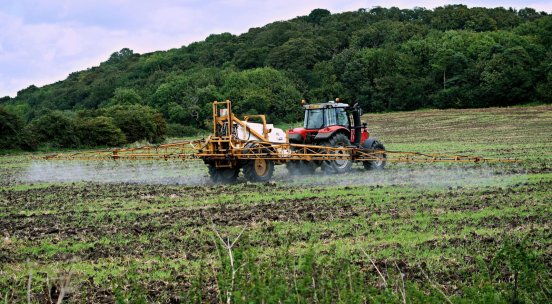
We would like to kindly remind you about the upcoming 11th International Scientific Conference “Utilization of Agricultural and Forest Machinery in Research and Teaching", which will take place on 23–25 September 2026 in Krynica-Zdrój, Poland.